Celebrating 60 years of Les Cousins, the folk club that shaped a generation | Songlines
Thursday, July 17, 2025

Celebrating 60 years of Les Cousins, the folk club that shaped a generation

By Tim Cumming

Tim Cumming talks to Jon Wilks about his Second Cousins stage at FolkEast, and the impact and influence of the legendary Les Cousins folk club on succeeding generations
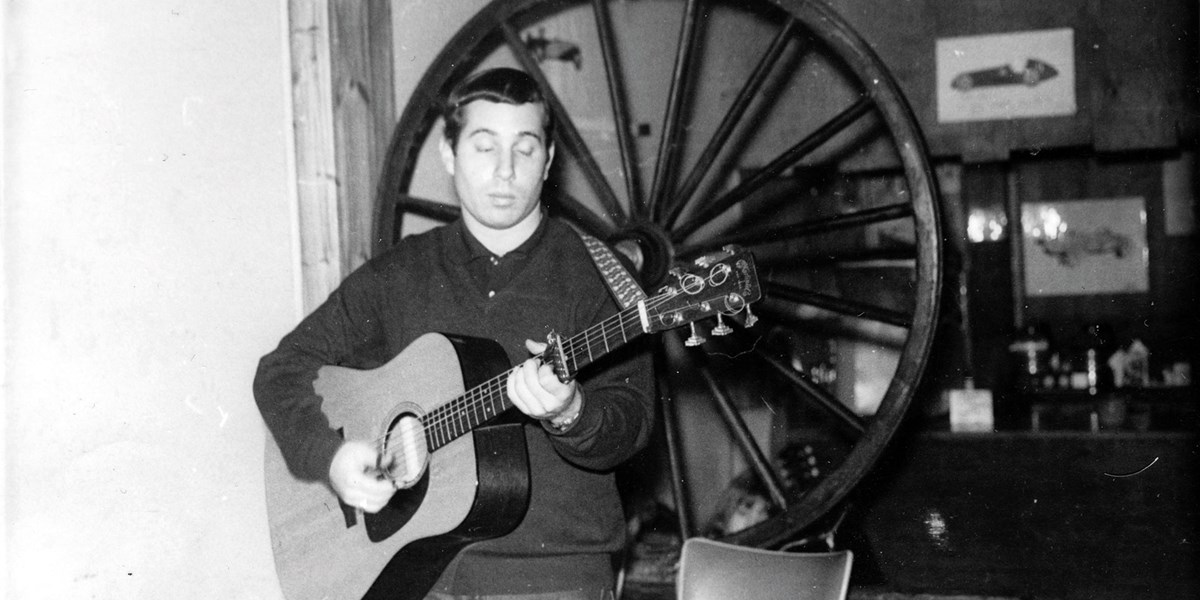
Paul Simon At Les Cousins (Courtesy Diana Matheou)

Paul Simon at Les Cousins (Chris Field)

It began in 1964 as a French-themed discotheque in the basement of a restaurant on Greek Street. Its Greek Cypriot owner called it Les Cousins (punters thought Les Cousins was the name of the man who ran it) and put up pictures of racing cars on the walls. It failed to take off. In April 1965, it reopened as a folk club, rapidly attracting the up-and-coming of the folk world to its small stage. Bert Jansch had a residency, Paul Simon played there, as did legends like Davey Graham and Sandy Denny. While places like the Troubadour focused on traditional music, Les Cousins was more anything-goes. It had the Matheou family, too, who ran the upstairs restaurant, and gave succour to the waifs and strays who took those dark basement stairs – embryonic singer-songwriters like Jackson C Frank, Al Stewart, John Martyn and Roy Harper.

“Traditional music was welcome, but people who were creating their own thing were welcome too,” says writer and musician Jon Wilks, who is curating and hosting the Second Cousins stage at this summer’s FolkEast in August, marking the venue’s 60th birthday. The event features an exhibition of memorabilia and photography, talks with people who were there, capped off with a formidable line-up of live music featuring veteran musicians and new performers influenced by the venue’s legacy.

“The one I’m most excited about is Bridget St John,” says Wilks. “She played her first gigs there and was good friends with Nick Drake and John Martyn. She has a real connection to the spirit of that place. We have Steve Tilston, who cut his teeth down there, and Ian [A] Anderson, who was known for his psych folk.” Younger artists on the bill include lauded new contemporaries Katie Spencer, Henry Parker, Sam Grassie and Cerys Hafana.

Everybody, says Wilks, was welcome to play and stay at Les Cousins, many of them drawn to the largesse of the Matheous. “They’d take them in and feed them moussaka – everyone who was there remembers the moussaka!” he says. “Martin Carthy would turn up in a cape, The Guardian under his arm, digging into the moussaka before going downstairs to play.

Once you got down there, you’d find a small dark room, and space for a busload of listeners. It hosted all-nighters and, lacking a liquor license, it was a place where teenagers could stay too, nursing a warm Coca-Cola for hours. “Everyone has that place, that pub or club, when you’re first able to go out and escape your parents’ watchful eye,” says Wilks. “For so many people, Les Cousins was that.” And its legacy as a crucible of incredible talent is a lasting one. “Nick Drake would play there,” says Wilks. “He only played 20 gigs in his lifetime, and a large chunk of those were at Les Cousins. He and Andy Matheou, the owner’s son, became firm friends.”

Andy’s wife, Diana, will also make a guest appearance. “She’s become a lovely friend and is a wealth of stories and information”, says Wilks. “Les Cousins ran from 1965 to 1972, and she was there in the latter part of that, helping run it, sitting by the door, taking money, and famously turned away Loudon Wainwright [III]. She has memories of driving around London with Nick Drake, splashing around in a boat on the Serpentine. Very un-Nick Drake stories. Her memories of him are largely of a quiet man who had a good sense of humour.”

One Les Cousins regular who probably won’t make it to the FolkEast stage is TV cook Delia Smith, who’d stay at the club after her restaurant shift ended at midnight until the Tube reopened in the morning. “She became a big Al Stewart fan,” says Wilks, who interviewed her for his upcoming book about Les Cousins. “But the one she hoped to see down there was Paul Simon, who went from being an itinerant singer-songwriter on the British folk scene to being [half of] Simon & Garfunkel pretty much overnight. He’d been at Les Cousins, and has talked about it being the only club that he ever thought of as being his home club.”

Diana Matheou still has Andy’s diaries, which note the people who played and the fees they were paid. “In 1966, you have Van Morrison playing on a Tuesday night for three quid”, marvels Wilks. “He’d moved away from [rock band] Them and was probably trying out his Astral Weeks stuff, in a place where people could go down and experiment with music.” The mind boggles at the idea of hearing nascent versions of those iconic songs at such close quarters. Maybe it’s time to tempt Van with three quid and a plate of moussaka to play the Second Cousins stage.

+ Second Cousins forms part of the programme at this year’s FolkEast, August 15–17, in Suffolk

Subscribe from only £7.50

Start your journey and discover the very best music from around the world.

Subscribe

View the Current
Issue

Take a peek inside the latest issue of Songlines magazine.

Find out more