Thursday, June 12, 2025
Rokia Traoré: “You cannot know how jail is if you have not been there. These people are human too”
Robin Denselow speaks to Malian singer and musician Rokia Traoré, who is finally able to return to performing after a custody battle that led to her imprisonment in several countries
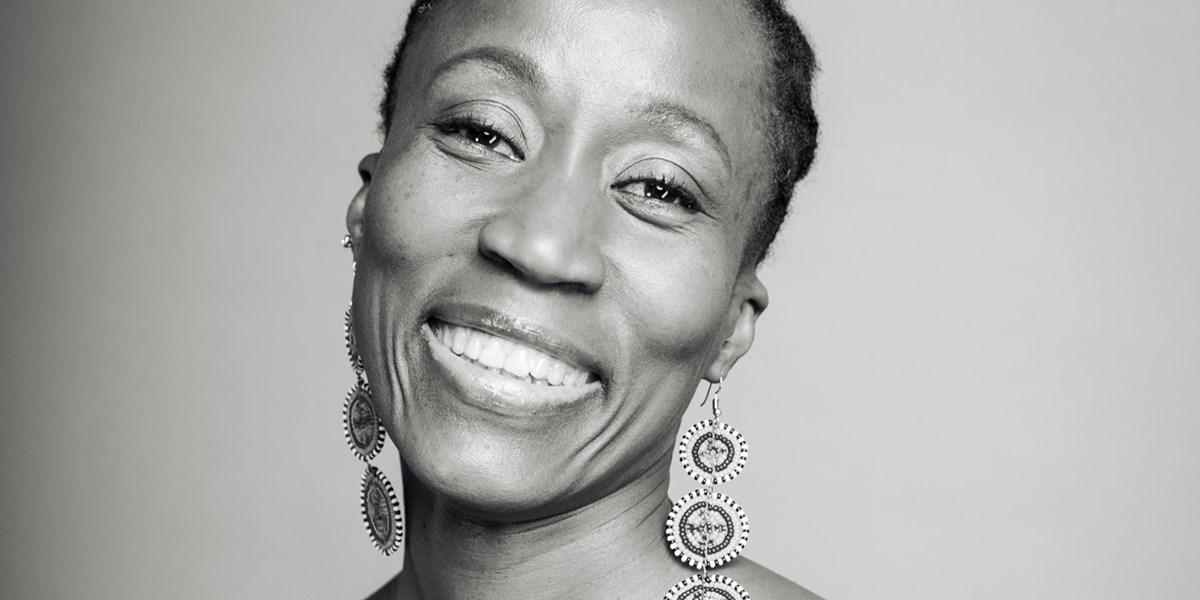
Rokia Traore (photo: François Rousseau)
Rokia is making up for lost time. She spent nine months incarcerated in France, Italy and Belgium, as the result of a child custody dispute. She hasn’t recorded for years, and she has barely performed at all. But now she is back home in Mali, having been released from prison in January this year, and she is finally working on new projects. There will be a book and a stage show, based on her prison experiences, but first, she is preparing for her first concert dates in Europe in five years. And she is clearly excited at getting back on the road, after her glorious career was halted by a Belgian court, and she switched from being an African superstar to a prisoner.
Speaking from Bamako, she explains that she is rehearsing with a new band for a new musical project, Fifty-Fifty, which will be a mixture of Mandinka classics, jazz covers and her own songs, some taken from the 2008 album Tchamantché (which won her a ‘French Grammy’, a Victoires de la Musique award), along with others from Né So (2016), the last album she recorded. Then there will be chansons françaises, and songs by the great Miriam Makeba, “though everything will appear new”, she says. “I’m composing some new music for existing lyrics, and with Miriam’s ‘I Shall Sing’; it’s her melody, but nothing is played exactly like her version. And we will change the setlist depending on where we are playing.”
The show will include two new Rokia songs, the French language ‘Que les Oiseaux Chantent’, a “song about joy”, and a samba, ‘Djamako’, which she says is “about the great sense of resilience and joy that you reach once you have faced very hard life situations – you realise that through the difficulties you also had the opportunity to learn about happiness and the essential things in life we yearn for.”
The concerts will start with a Brazilian samba rhythm that “never stops… it will be there between songs, and we finish with the samba ‘Djamako’.” And for the new project, there will be a new band, hailing from across West Africa. From Mali, there’s Samba Diabaté: “[he] is amazing. He can play Mandinka styles, jazz and rap”, along with Aristide Nebout from the Ivory Coast on bass, Angélo Agbasse from Benin on drums and Abdoulaye Coulibaly from Burkina Faso on balafon. She likes that mix of nationalities, she says, because “we have to build a possible united Africa. If everybody does a small piece, we can put everything together and create something big one day”.
She last played in Europe in early January 2020, when the Philharmonie de Paris presented ‘the Rokia Traoré Weekend’, at which she performed three different shows. So, how does it feel to be singing again? “My voice is good and I never really stopped singing, except for two years between 2020 and 2022. But everything comes back very easily – I’ve been singing for almost 30 years!”
She has enjoyed a glorious and adventurous career – after all, she won Best Artist at the inaugural Songlines Music Awards in 2009 – but then came the custody dispute. It concerns her daughter, who was born in Belgium in 2015 but spent part of her early years in Mali. In 2019, the child’s father was granted custody through a family court in Brussels, but a court in Mali later granted sole custody to Rokia. After she had failed to produce her daughter in the Belgian court, a European arrest warrant was issued, in which she was accused of “kidnapping and hostage taking”.
In March 2020, as she passed through Paris, she was arrested and jailed. Held in Fleury-Mérogis, which she called “the worst prison in France”, she went on hunger strike, while musicians including Salif Keita, Youssou N’Dour, Angélique Kidjo and Damon Albarn (who had sung with her during Africa Express shows) demanded her release. She was released after six weeks because of the COVID-19 pandemic, and told to remain in France before extradition to Belgium, but instead flew back to Mali on a private jet, using her diplomatic passport. She said she was worried about the safety of her daughter and her elder son during the pandemic.
She stayed in Mali for the next four years, leaving to play in Lomé and South Africa in 2023, the latter her most recent performance. In her absence, she was sentenced to two years’ imprisonment by a Belgian court, but in June 2024, she decided to relaunch her European career, after being booked to give a concert at the Colosseum in Rome. She flew to Italy, was arrested again and held for five months in an Italian jail before being moved to Belgium, where she was held for two months. Youssou N’Dour, Orchestra Baobab and Keziah Jones were among the artists who contributed to a #SupportRokiaTraoré compilation which drew attention to her situation.
She was eventually released in January this year after she signed a confidential agreement with her daughter’s father, validated by the court.
So, how did she survive those seven months in jail? “It was very hard. I was really sad and it was difficult for me not to have any idea when everything would be over and I could be with my children again. I was trapped, and in a bad psychological state, but at the same time, it was a kind of privilege because I was learning things that it’s not possible to learn without being in that situation. You cannot know how jail is if you have not been there. These people are human too. In jail, I wasn’t fearful of someone who had killed someone, or high-level criminals… I just saw women like me crying, having joy… everything is much more intense in jail.”
She says the other women were “very supportive of me and said ‘you have done nothing – we understand now’ – because they all knew my story from the news and TV.” She spent much of her time writing, saying “it was important for me to talk to the others and write about their experiences, which were very different to mine. I was sharing jail with women who had real troubles, which was a way to get away from my problems. My fears were nothing compared to theirs, and it left me time to think about their cases and forget [about] myself.”
She says the prisoners approved. “I said I was going to write about them, and they told me ‘please, when you are out, talk about us, about our need to see our children, to be treated as normal people when we are out’ – because the fear of all women in jail is how to start another life… how are others going to see us? They wanted me to write about this, and how transfers to a different prison are very hard for them. On the day of a transfer, all the women cried, and so did I…”
Rokia is writing a book which will combine prisoners’ stories with comparisons between the conditions, and the way that guards treated the women, in the three countries where she has been held. She says that while the Italian prisons are older, there is more respect for human rights there. Prisoners were even allowed to draft petitions regarding their grievances.
She also considers the question ‘what is a prison for?’: “Is it a place for people to re-construct themselves after failures in their lives and mistakes they have made, or a place where we are going to forget those who did bad things? This project is important for me. I’m a witness to a place that no one knows.”
Along with the book, there will be a stage show, “a piece of musical theatre”, based around monologues taken from the book. She has not yet decided if it will be a solo performance, “but there will no more than two people on stage”, and she has yet to decide on the music, though “I’m going to write something new, made for the piece and the staging… probably something showing the connection between Mandinka, blues and classical styles.”
The show will open in France, where she has had discussions with Moïse Touré, director of Les Inachevés theatre company, and will be titled À Huis Clos, with a version in English called In Camera to follow. The aim is for the stage show to coincide with the book’s publication. So, how is it all going? “Well. The book and the theatrical project are on their way; the book is now almost finished, except for the closing section.” She says that the book will be “more technical”, dealing with women’s rights and whether there needs to be a change in the law.
But for the moment, Rokia says: “My priority is for this band to rehearse and be ready for the gigs in July.” These concerts will be “joyful”, she stresses, with no mention of prison.