Votia on stewarding the legacy and importance of La Réunion’s Afro-Malagasy traditions | Songlines
Thursday, June 12, 2025

Votia on stewarding the legacy and importance of La Réunion’s Afro-Malagasy traditions

By Pierre Cuny

“I also give ear to social injustice and violence, specifically to women. But of course, I do celebrate the beauty of the island and its strong identity.”
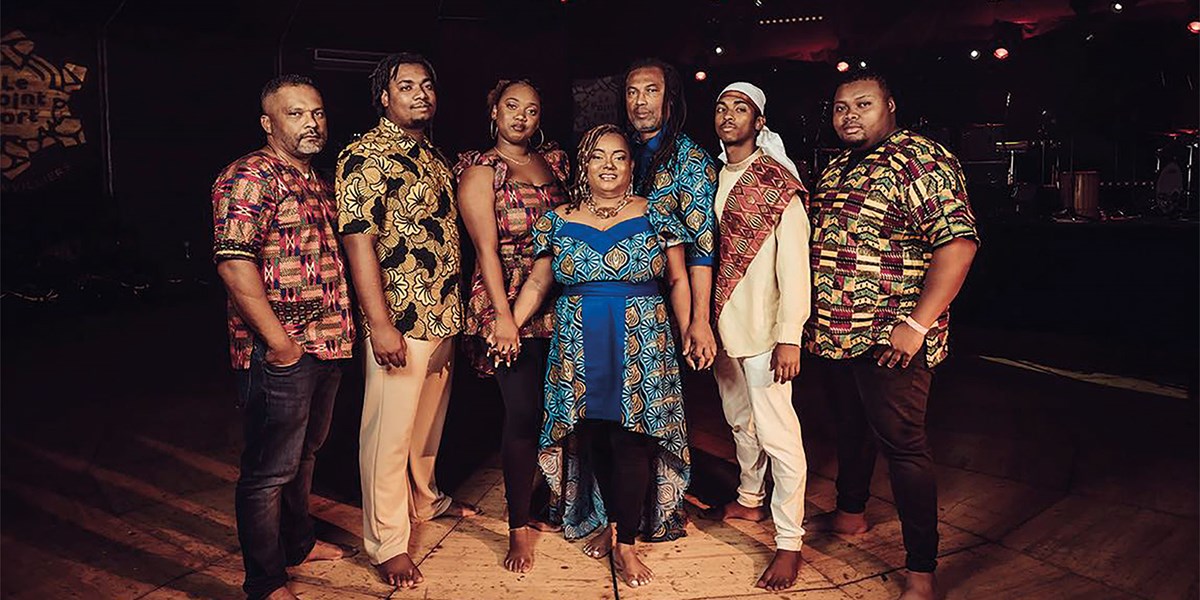
Marie Claude Lambert Philéas (Centre) With Votia

Marie-Claude Lambert-Philéas (centre) with Votia (photo: Eric Garault)

Maloya is my whole life, my guiding path, both personally and professionally!” declares Marie-Claude Lambert-Philéas with a large smile during our video call to discuss her band Votia’s long-awaited second album, Vié Kaz (‘The Old Log Cabin’). Speaking from her home on La Réunion, Lambert-Philéas explains how she created her family group of musicians as a legacy to maloya, the Afro-Malagasy music, song and dance tradition specific to this island. The roots of today’s maloya are found in the music created by enslaved people from East Africa and Madagascar who worked in the local sugar plantations. Over time, this music became a way of expressing the joy of being together, but as Lambert-Philéas adds, “I also give ear to social injustice and violence, specifically to women. But of course, I do celebrate the beauty of the island and its strong identity.”

Lambert-Philéas’ father was Granmoun Lélé, one of the greatest singers and masters of maloya. She grew up steeped in the music and its ancestral importance, often accompanying her father as a singer or dancer during private ceremonies or live shows. When her father died in 2004, followed by her mother and daughter in 2008, music became even more important as a salve for her sadness, and as a way of continuing her maloyan heritage.

A mother of five, Lambert-Philéas gathered her family around her to form Votia, which includes her husband Fabrice Lambert, her children, cousins and friends. “We are eight in total on stage and usually just six when travelling, and we sing in the form of call-and-response,” she tells me. With her powerful yet joyful voice, Lambert-Philéas leads the call in Malagasy and Creole, with responses delivered by polyphonic harmony vocals and fast polyrhythmic percussion on kayamb, roulèr, sati and piker. Asked what is different about her way of playing maloya, she explains: “Our expressions are more war-like than in other parts of the island, with a sentiment of revolt. I think the main reason for this is that, historically, a greater number of slaves passed through Saint-Benoît, our hometown on the eastern side. Our music is also inspired by our ancestors from Madagascar, southern India and, of course, continental Africa.” Votia’s repertoire mainly consists of Lambert-Philéas’ compositions, with a couple by her children and a few drawn from her father’s vast collection. “At rehearsals I bring my own texts, others bring theirs, and then everyone participates in the process of harmonisation and overall arrangements”, she says.

Lambert-Philéas is firmly embedded in the local community and very involved with Saint-Benoît’s music and dance conservatory, Centre Gramoun Lélé (perhaps understandably, given it’s named after her father). She holds a music teaching degree so that she can help youngsters appreciate that maloya is an integral part of their identity. “It has become a family affair to inspire future generations to carry forward all aspects of maloyan culture as it is linked to the difficult social realities of our everyday life”, she tells me. “As traditional musicians,” she concludes, “we are guardians of this legacy, and it is our duty to ensure it thrives.”

Subscribe from only £7.50

Start your journey and discover the very best music from around the world.

Subscribe

View the Current
Issue

Take a peek inside the latest issue of Songlines magazine.

Find out more